
Clinical study results
StratifyHF is being validated through a prospective, multicentre longitudinal clinical study conducted across eight European Clinical Centres of Excellence in heart failure diagnosis and management. To date, participating centres have collected demographic and clinical data from 5,624 patients with a confirmed diagnosis of heart failure and 4,465 patients with suspected heart failure, forming one of the largest real-world data pools supporting an AI-based decision support system in this field.
The project is recruiting up to 1,600 individuals (800 at risk of or suspected of HF, and 800 with a confirmed diagnosis), aged 45 and over, with up to 24 months of follow-up.
The current state of the study has been peer-reviewed and published in BMJ Open. This data collection is the main backbone of the development and clinical validation of all StratifyHF AI tools, the decision support system, and the mobile app.
Synthetic data and digital patient library
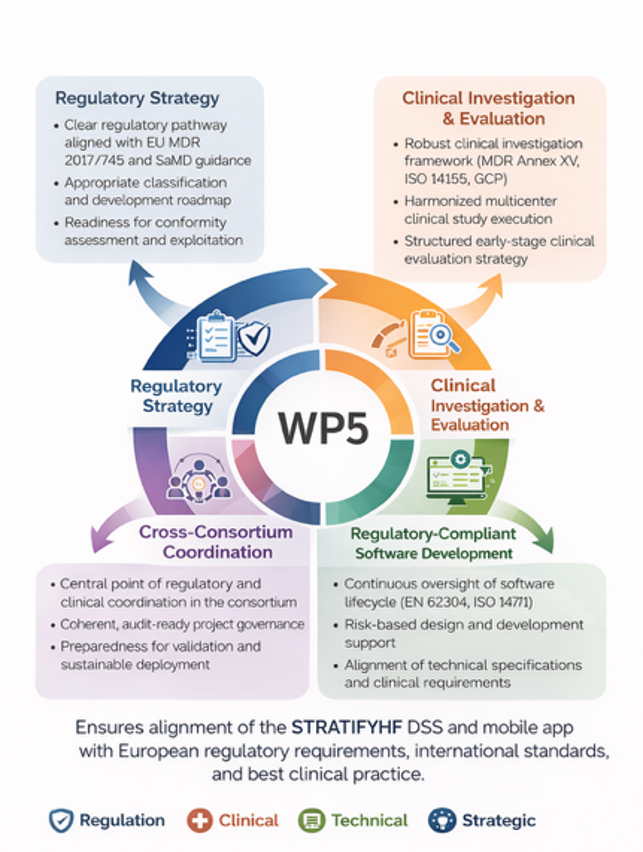
The project is building a digital patient library and a set of AI-driven algorithms for risk stratification, early diagnosis, and disease progression of heart failure. Work so far includes machine learning models for risk classification of sudden cardiac death, gene expression-based classifiers, and predictive models for symptom emergence and morbidity in HF patients.
Several of these algorithms have already been presented at international conferences and published in scientific journals, reflecting steady technical progress toward the analytics core that will power the StratifyHF decision support system.
Decision support system
StratifyHF is developing an AI-based decision support system (DSS) that integrates patient-specific demographic, clinical, genetic, lifestyle, and socio-economic data to support risk stratification, early diagnosis, and progression assessment for heart failure. The consortium has defined the DSS’s software architecture and built an initial web-based interface for clinicians to interact with the AI-driven outputs.
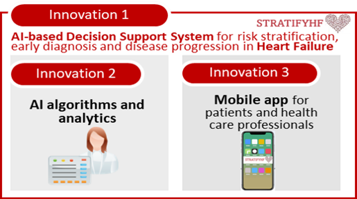
The DSS is being developed with the aim of qualifying as a Class IIb medical device under the European regulatory framework, with the ambition of reaching Technology Readiness Level (TRL) 8 by the end of the project.
The StratifyHF decision support system currently encompasses AI based modules for disease progression, risk stratification and early detection of heart failure. The DSS will also include voice biomarker based patient assessment for all users and helpful tools for imaging data processing for medical professionals.
Mobile application
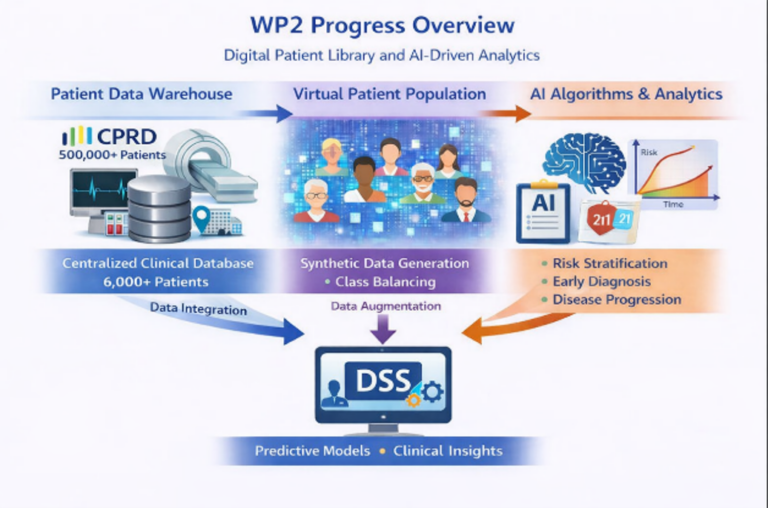
Alongside the clinical decision support system, StratifyHF is designing a mobile app to help patients better manage their condition and to support healthcare professionals in choosing evidence-based prevention and treatment strategies.
Health economics
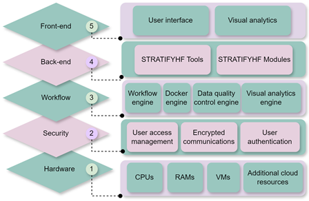
To assess the real-world value of the StratifyHF approach, the consortium is analysing the health economics and cost-effectiveness of the DSS compared with current heart failure care pathways. Early findings on the economic evaluation of heart failure strategies within the project have been presented at an international conference, with fuller results to follow as the clinical study progresses.
Dissemination results
The StratifyHF consortium has been active in sharing its scientific progress with the research community, publishing three peer-reviewed journal articles and more than twenty conference papers at venues including ICIST, SICAAI, EMBEC, ECCOMAS, IEEE BIBE, ESB, and the Contemporary Materials conference, among others. The project also maintains an active presence on Twitter/X and LinkedIn to keep clinicians, researchers, and the public informed of its progress.